Executive summary
Couple friendship is a shared-life need.
Couples are not simply looking for another pair to meet once for dinner. Many are trying to create a shared social circle: people for game nights, walks, family plans, weekend trips and ordinary friendships that continue over time.
The findings suggest that this need spans ages and life stages. Newer couples may be building a social identity together, while established couples may be rebuilding their circle after moving, changing routines or losing touch with older friends.
Key findings
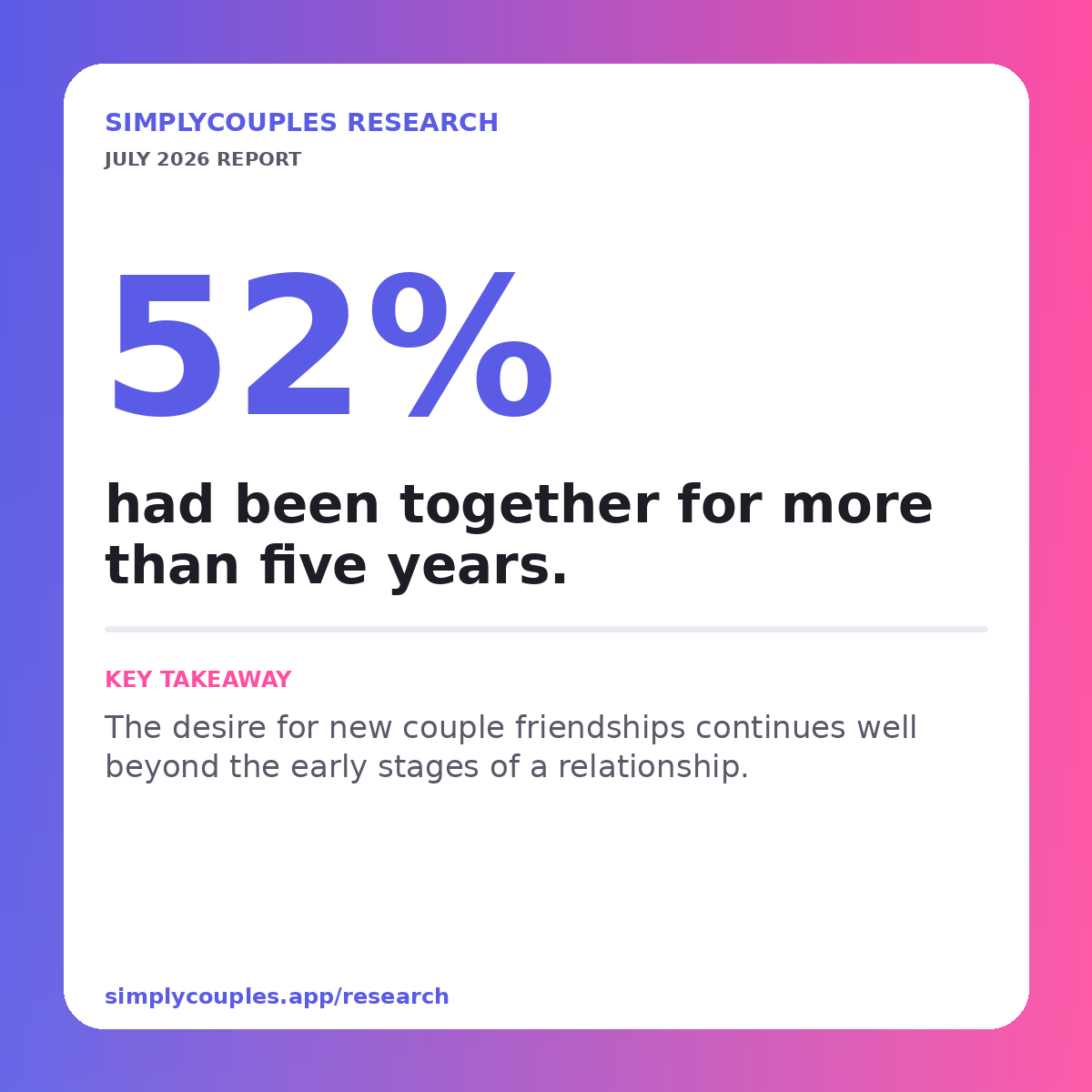
More than half had been together for over five years.
The desire for new couple friendships continues well beyond the early stages of a relationship.
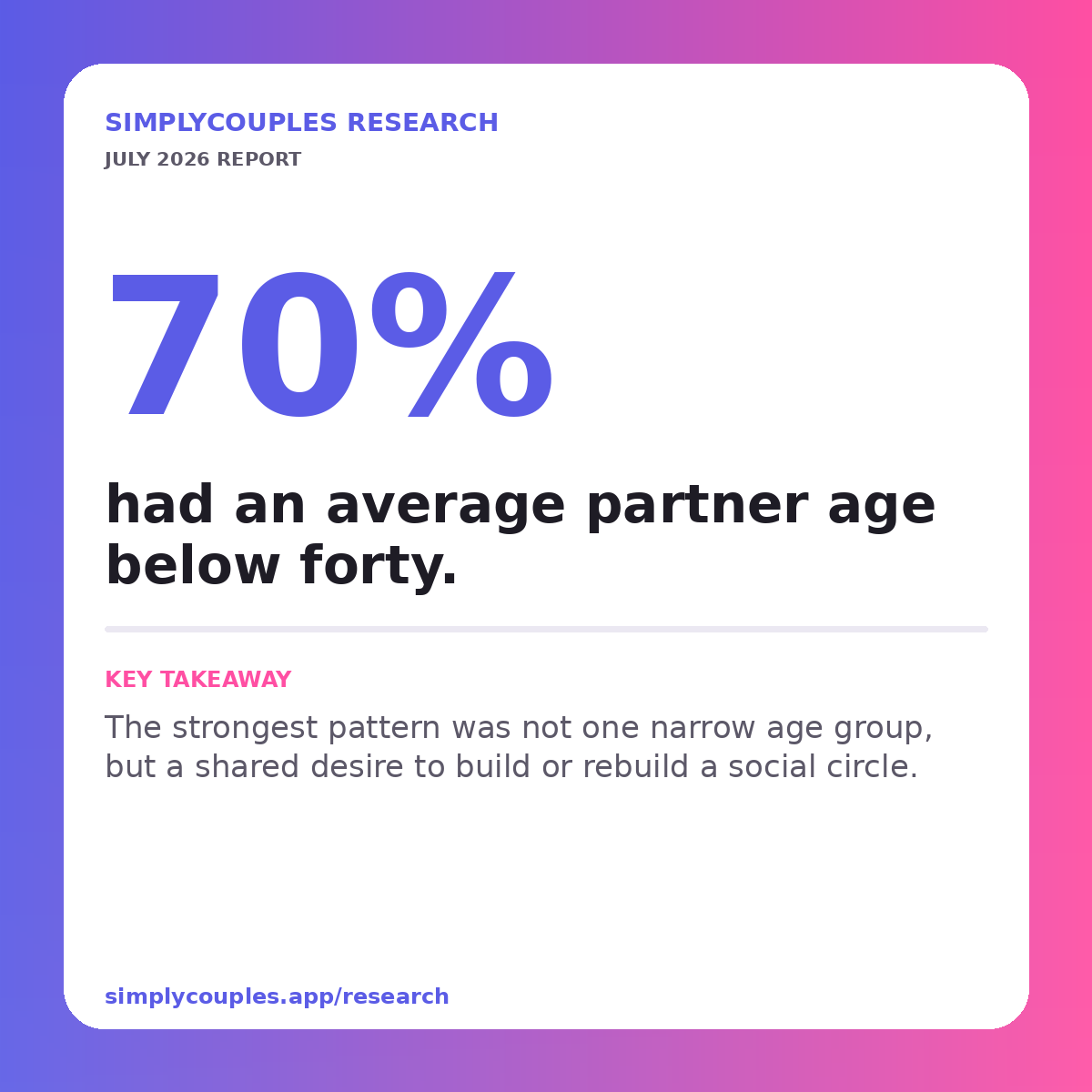
Most couples averaged under forty.
The sample also included couples in later life stages.
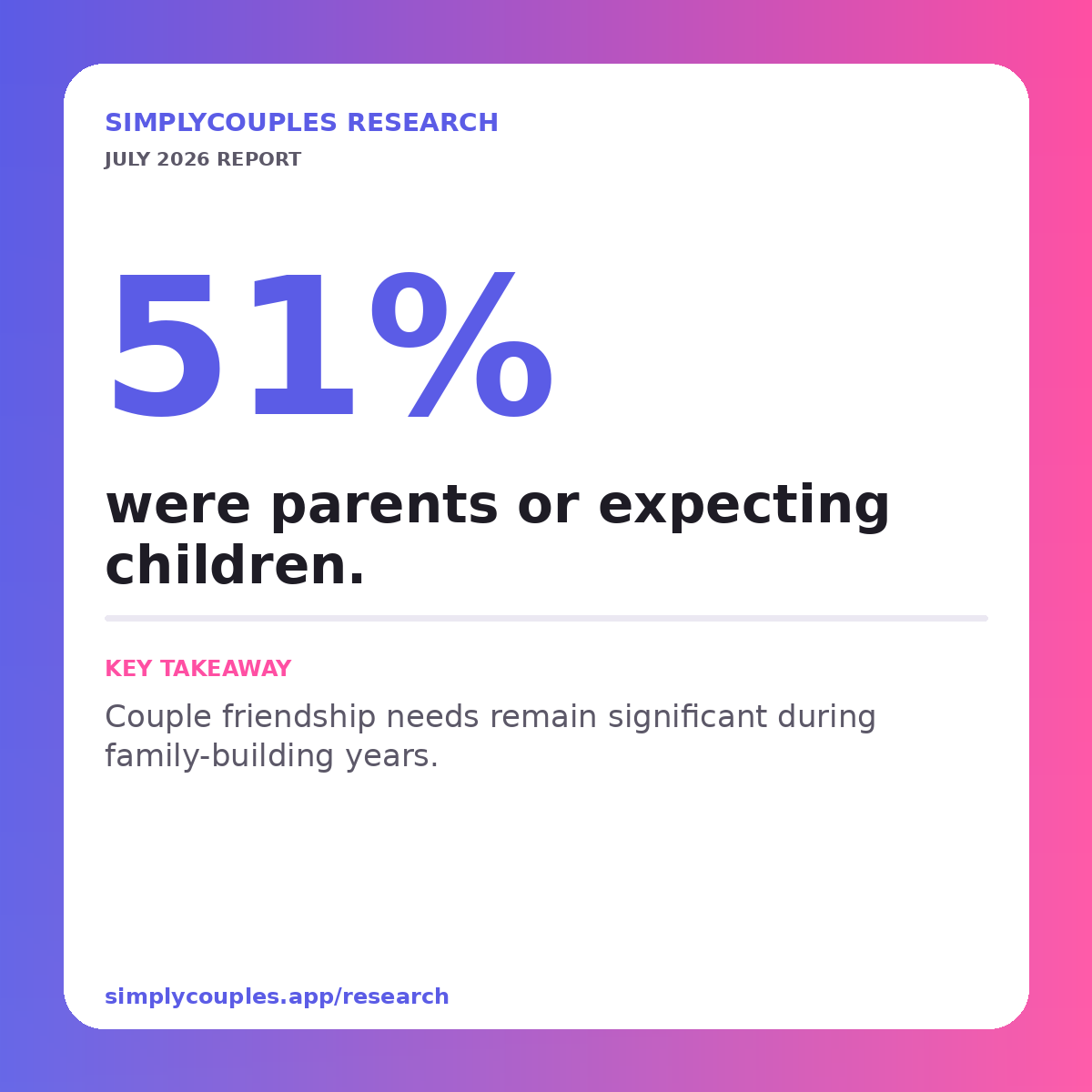
Parents and expecting couples formed half the family-stage sample.
The other half reported having no children.
Most partners were close in age.
Three quarters were within four years of one another.
One in four had been together for over a decade.
Established relationships remain active participants in building new social circles.
Relationship stages
Why long-term couples still look for new friends
More than half of couples in the relationship-stage sample had already been together for over five years. A quarter had been together for more than ten years.
Couple friendship can become important after a move, a new family stage, changing work patterns or the gradual narrowing of an existing social circle.
Long-term relationships do not reduce the desire to build new friendships.
Family life
Parents and couples without children are both looking for couple friends
Among couples who shared their family stage, the split was almost even. Friendship compatibility can therefore include routines, schedules and the kinds of plans people can realistically make.
The broader need is not limited to one family type. It is finding couples whose lives and expectations fit.
Life-stage compatibility may matter as much as shared interests when couples make friends.
Age and life stage
Making friends as a couple is not limited to one age group
Most couples in the sample averaged under forty, but the community also included couples in later stages of life. The strongest commonality was not a narrow age range. It was the desire to build or rebuild a shared circle.
The need for couple friendship spans multiple stages of adult life.
What the data suggests
The problem is not convincing couples that friendship matters.
It is helping compatible couples find one another at the right moment, with enough overlap in life stage, interests and availability for a friendship to become real.
What surprised us
Four patterns worth watching
- The demand spans multiple relationship stages, not only newly married couples or new parents.
- Home-based activities appear alongside going-out plans, suggesting that comfort and repeatability matter.
- Established couples are still actively expanding or rebuilding their social circles.
- Shared interests help, but friendship also depends on timing, routines and life-stage compatibility.
Methodology
About this research
The July 2026 report is based on an anonymized research sample of couples in the United States using SimplyCouples. Personally identifiable information was excluded, and findings are presented only in aggregate.
Read the full methodology
The analysis used profile information voluntarily provided within SimplyCouples, including partner ages, relationship stage, family status and shared interests. Percentages for optional questions are calculated only among couples who completed the relevant field.
The sample reflects couples actively seeking friendship through SimplyCouples and should not be interpreted as representative of all couples in the United States. The report focuses only on profile-level friendship patterns and does not evaluate product performance or outcomes.
For media and bloggers
Downloadable graphics
Use these report graphics in editorial coverage with attribution to SimplyCouples Research.
Cite this report
SimplyCouples Research. “How Modern Couples Build Friendships.” July 2026. https://simplycouples.app/research/couple-friendship-report-july-2026
About SimplyCouples
Built for platonic couple friendship.
SimplyCouples helps couples meet other couples for real-life friendships and shared plans. The app is designed around clear platonic intent, couple-first profiles and conversations that can move naturally into everyday social life.
Learn about SimplyCouples →